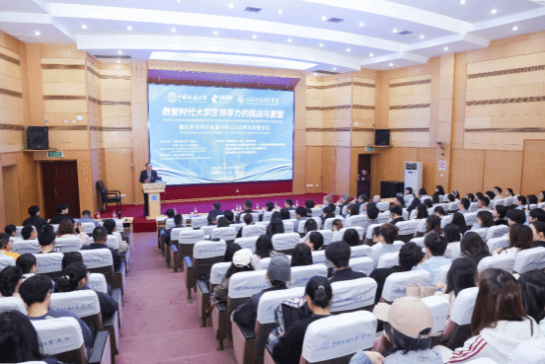

On 25 April 2026, the International Academic Symposium on “The Challenges and Reshaping of College Students’ Leadership in the Digital Intelligence Era”, together with the LEAD Academic Network Conference, was held at China University of Geosciences (Wuhan). The EU–China Higher Education Research Centre (ECHE) played a prominent role in the conference. The event brought together nearly 100 participants, including senior scholars, early-career researchers, and students from China, Belgium, the United States, Poland, South Korea, Croatia, Bulgaria, and Hong Kong SAR.
The opening ceremony was chaired by Prof. Chu Zuwang and featured a welcoming address by Mr. Wang Fu from China University of Geosciences. In their remarks, the speakers emphasized the importance of cultivating innovative, responsible, and globally competent student leaders, and highlighted the need for higher education institutions to respond proactively to rapid technological advancements and evolving societal demands.
The symposium featured keynote speeches, invited talks, plenary sessions, and a Young Scholars Forum, with 26 distinguished experts and 10 young scholars presenting their work. Discussions focused on key themes such as digital academic leadership, artificial intelligence in higher education, student agency, and governance transformation, reflecting the growing complexity of leadership development in the digital intelligence era.
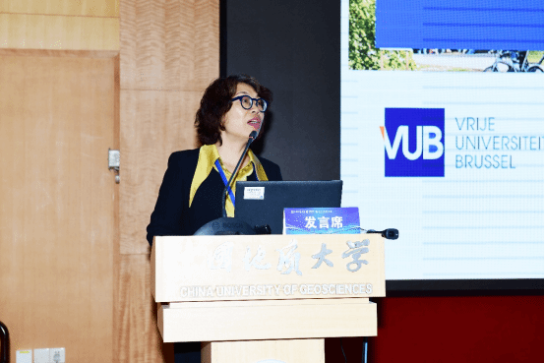
Prof. Chang Zhu (Vrije Universiteit Brussel, Director of ECHE and LEAD Academic Network) delivered a keynote speech on digital academic leadership, highlighting that it involves not only the application of technological tools, but also vision-building, strategic coordination, capacity development, and innovation in academic practice. She further emphasized the importance of integrating digital readiness, ethical governance, and global collaboration into academic leadership in order to enhance both research effectiveness and institutional resilience.
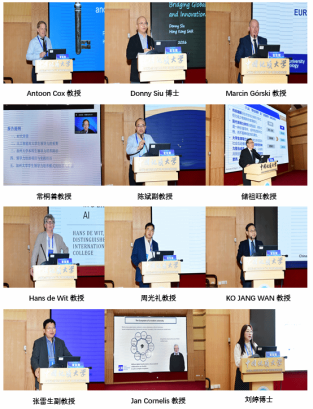
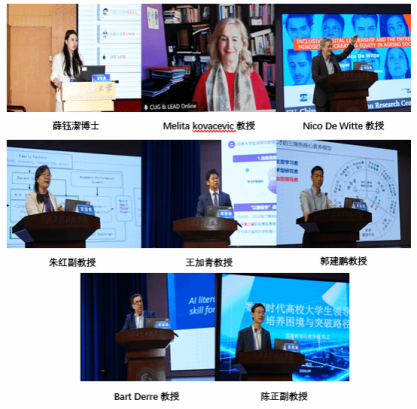
Scholars from Vrije Universiteit Brussel (VUB) actively contributed to the programme. Prof. Antoon Cox explored how artificial intelligence can empower student learning while preserving student agency, and Prof. Jan Cornelis examined the evolving role of universities and the protection of student rights in the AI era. Dr. Yujie Xue (Postdoctoral Fellow, VUB) presented her research on “Exploring the Mechanisms Influencing Graduate Students’ Adoption of Generative AI”, analysing how emerging technologies shape student engagement and decision-making processes. Her work contributes to ongoing discussions on digital transformation, student learning behaviour, and governance in higher education.
The international dimension of the symposium was further enriched by contributions from ECHE-affiliated scholars such as Prof. Marcin Górski (Silesian University of Technology), who examined student roles within European university alliances, and Prof. Melita Kovačević (University of Zagreb), who highlighted the shift of student leadership from campus-based contexts to digital and networked environments. The Young Scholars Forum also featured emerging researchers, including VUB doctoral researcher Zhang Yuting, providing a platform for early-career scholars to engage in international academic exchange and dialogue. This reflects ECHE’s continued commitment to supporting the next generation of researchers.
The first day of the symposium demonstrated ECHE’s important role in strengthening EU–China academic collaboration, facilitating knowledge exchange, and advancing research on higher education in the digital intelligence era. It also laid a strong foundation for continued dialogue and future collaborative initiatives among international partners.