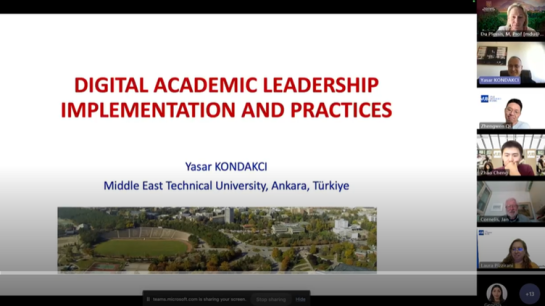

The fifth webinar of the Digital Academic Leadership Webinar Series, organized by the EU–China Higher Education Research Center (ECHE) at Vrije Universiteit Brussel (VUB), brought together academics and higher education practitioners from across the world to exchange insights on current research and evolving perspectives in Digital Academic Leadership.
The session featured the presentation of Prof. Yasar Kondakci, professor of Educational Administration and Planning at the Middle East Technical University. He obtained his PhD at Ghent University, Belgium in the field of Management and Organization. His main areas of research are higher education, educational change, and social justice in education.
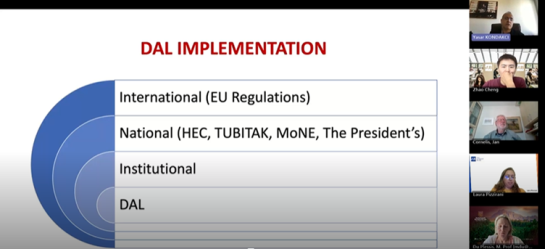
Prof. Yasar Kondakci’s lecture examined how the Turkish higher education ecosystem is responding to the integration of artificial intelligence into teaching, research, and administrative practices. Drawing on key regulatory documents and reports, he explained that AI adoption in Turkey is shaped by three interconnected levels: international frameworks, national regulatory bodies, and institutional university policies. At the national level, organizations such as the Higher Education Council, the Scientific and Technological Research Council, the Ministry of Education, and the Presidency provide guidance for the use of AI in higher education.
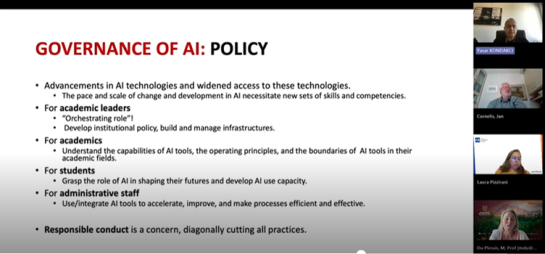
A central focus of the lecture was the governance of AI in universities. Prof. Kondakci emphasized that responsible AI integration requires clear institutional policies, infrastructure development, and competence-building across the whole university community. He described academics as “orchestrators” of AI integration, responsible for guiding institutional policies, managing digital infrastructures, and understanding both the possibilities and limits of AI in teaching and research. He also highlighted the need to prepare students to use AI meaningfully in their future professional lives and to support administrative staff in using AI to improve the efficiency and quality of university services.
Overall, the webinar underlined that digital academic leadership in the age of AI requires not only technological adaptation, but also coordinated governance, ethical responsibility, and continuous competence development across academic institutions.